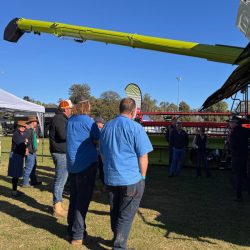
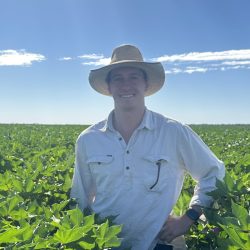
Weebollabolla’s Jen Jeffreys ahead of the property’s annual open day, which will also host a Cattle Australia cattle transaction levy review consultation. Photo: Claudia Hiscox.
Every time ownership of most cattle changes hands, five dollars goes with them.
Across Australia’s grass-fed cattle sector, those individual charges added up to more than $75 million in 2024–25, funding a national pool for beef marketing, research and development, animal health programs and residue monitoring.
Now, in the first comprehensive review of the levy in 20 years, Moree Plains graziers are being asked a simple question: is that money working hard enough for the people who pay it?
Cattle Australia’s national Cattle Transaction Levy Review will arrive at Weebollabolla on Monday, August 10, with a two-hour producer consultation held alongside the property’s 2026 open day.
The review comes as cattle businesses continue to watch their margins closely. Meat & Livestock Australia reported in May that fodder and freight were among the dominant cost pressures for cattle producers, with average cattle farm cash costs of about $409,000 a year.
MLA’s 2026 cattle industry projections also identified production expenses, higher interest rates, exchange-rate volatility and sudden input-cost shocks as continuing pressures on producer margins.
Against that background, the committee is examining not only whether the levy should remain at $5, but whether producers are receiving enough value from it and whether the money is still being directed to the right priorities.
At present, the $5 grass-fed cattle levy is divided into four streams.
Meat & Livestock Australia receives $3.66 per head for domestic and international marketing, while 92 cents goes to research and development. The National Residue Survey receives 29 cents and Animal Health Australia receives 13 cents.
The current $5 rate was introduced following the last comprehensive review in 2006 and has remained at that level.
The present allocations are also difficult to change quickly. Cattle Australia’s review material says altering the levy rate or the way funds are distributed requires substantial industry consultation and government consideration.
Whether that structure reflects what cattle producers need in 2026 is precisely what the committee is coming to Moree to find out.
The review is considering the levy rate, the way funds are allocated, the areas eligible to receive funding and the governance and transparency surrounding the system. Leaving the existing structure unchanged is also among the options.
Cattle Transaction Levy Review Committee western representative Dean Ryan said the process depended on hearing from those who paid the levy.
“This review is about listening to the people who pay the levy and understanding where they see the greatest value, whether that is in research and development, marketing, biosecurity, market access, animal health or other industry-good priorities,” Mr Ryan said.
“I encourage producers to come along, ask questions and share their views. The stronger the producer input, the stronger the recommendations that can be put forward later this year.”
Committee member and cattle producer Harry Youngman said practical experience from producers was central to the review.
“The cattle transaction levy review needs to be shaped by the producers who pay the levy and understand what is needed on the ground,” Mr Youngman said.
“We encourage producers to attend a local consultation meeting, ask questions and share their views on how levy funds can best support productivity, profitability and the long-term future of the cattle industry.”
The session will include an explanation of the levy review, a presentation on its discussion papers, a facilitated question-and-answer session and an opportunity to give feedback directly to committee members.
It will not rewrite industry policy on the day, but the views gathered at Weebollabolla will feed into recommendations developed after the national consultation process.
Potential recommendations could then be put to levy payers at Meat & Livestock Australia’s annual general meeting in November before any government consideration or implementation.
For graziers already attending the Weebollabolla open day, the consultation provides a direct chance to question where their $5 goes before the committee settles its recommendations.
The free session will run from 1.30pm to 3.30pm at Weebollabolla, Moree.
Bookings are essential for catering and can be made through Eventbrite at https://www.eventbrite.com.au/e/moree-ca-levy-review-regional-consultation-tickets-1994754856473.