THE 1950s have often been called the ‘perfect decade’.
Significant post-World War II reconstruction and economic growth created employment opportunities, consumer spending, suburban growth and a sense of peace and stability.
For Mona Assef, the year 1950 was not only the start of a perfect decade, but the start of a new life in Australia.
It was the year she married John Assef in Lebanon and crossed the globe to settle in Moree, where her husband had opened a clothing store 12 years earlier.
Mona, from the village Bechmizzine, was 20 years of age at the time.
The year 1950 was indeed a perfect start for the young lady from Lebanon – a teacher – who would become one of Moree’s most admired and respected matriarchs.
To many, she was ‘Mrs Assef’, and ‘Sitty’ to her many grandchildren and great-grandchildren, and for the next 70 years she played a key role in the success of the family clothing store in Moree.
Sadly, Mrs Assef passed away peacefully on December 5 – her 96th birthday – at an aged care nursing home in Willoughby.
Assef’s has been a clothing institution in Moree since 1938, when the Assef and Serhan families took over Macey’s store on Heber Street.
In late 1940, construction of a brand-new, art-deco store was completed in Balo Street and about 25 years later the building underwent a major expansion to include a dedicated ladieswear section, arcade and a new, larger upstairs residence.


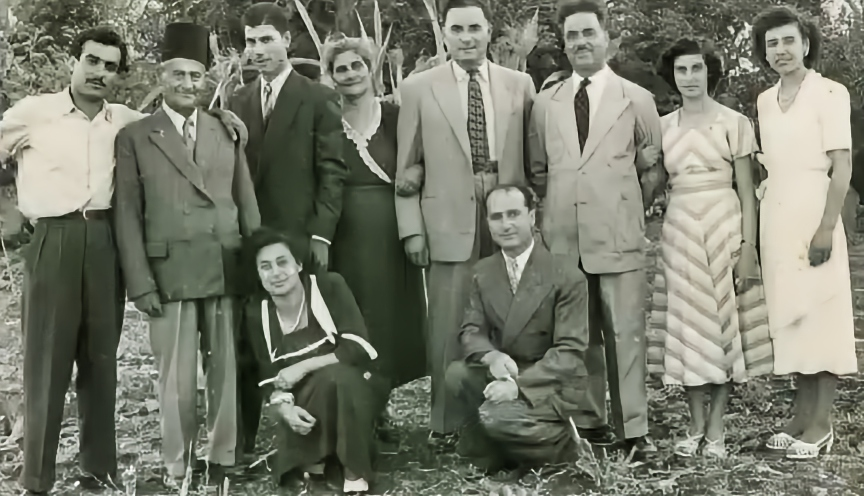


The iconic store is now celebrating its 85th Christmas, and Mrs Assef was an instrumental part of the family-owned and managed store’s success for more than seven decades.
John and Mona Assef raised three children – Antoinette, Paul and Rhonda – in their home above the shop. John passed away in 1999 and Mona continued to live on the premises.
After 72 years living upstairs, Mona moved to Sydney to spend more time with her daughters and extended family.
She truly believed, and often said, Moree was the best place on earth to live.
Rhonda Assef said her mother was the bravest woman she knew.
“Mum left her family and country and travelled to the other side of the world in 1950 when she was 20 years old,” Rhonda said.
“She had to learn English and try to settle into a new community and cope with homesickness. She raised her family far from her parents and most of her siblings.
“Mum came from a small village in Lebanon, moved to a small town in New South Wales for most of her life and then to a small aged-care community at Willoughby.
“In each of these small communities she had a big impact because of how she lived and how she loved,” Rhonda said.
Mrs Assef left Moree nearly three years ago to be closer to family in Sydney. She was still actively involved in the day-to-day running of the family clothing business prior to relocating.
“Mum supported dad throughout his business life and after he died she continued to be there each day to support Paul and later Keryn and Daniel,” Rhonda said.
“They could rely on her to do the jobs she set out to do, like opening the shop and doing the tills and the banking.
“She did this into her 90s and only stopped when it became difficult for her to get up and down the stairs.
“Mum was kind and warm-hearted and was always welcoming – not just with family, but with everyone she knew.
“She loved being part of a large extended family, and loved being part of the Moree community and the shop family. She loved her own family, especially her grandchildren and great-grandchildren, and they adored her,” Rhonda smiled.
Rhonda’s daughter, Jemima, said the story of her Sitty is inspiring.
“It starts in 1929 in Lebanon, where my Sitty – Mona – was born,” Jemima said.
“She grew up in a small town called Bechmizzine, where life in the country was peaceful. She was surrounded by family and friends and knew most people.
“When Sitty left school she wanted to be a teacher, so she studied for two years at teachers’ college in Lebanon’s capital, Beirut.
“Sitty returned to her home town and began teaching. This was around the time of the second world war, and even though there was terrible fighting around the world, Lebanon was a safe haven for soldiers, a place where armies were brought to rest in the middle of all the fighting, especially places in the country like Bechmizzine,” Jemima said.
“Sitty’s life undertook a huge change when she met my Jiddi, John Assef, when she was 20.
“John was originally from Lebanon, but had moved to Australia with his father when he was 14 years old,” she said.
John and his family started their new life in Australia in Quirindi in north-west New South Wales.
“Many Lebanese people were migrating at the time to find a better life for themselves, as making a living in Lebanon was difficult,” Jemima said.
“As well as this, land was generally divided between families. Therefore, as generations went along, blocks of land got smaller and smaller.
“Three of Sitty’s brothers had moved to Argentina, and others were moving to America, Africa and other countries in South America.
“John came back to Lebanon and met Sitty in Bechmizzine and less than a few months after meeting, they were married,” Jemima said.
“For Sitty, this meant leaving everything and everyone she knew and travelling halfway across the world to a tiny farming town called Moree.
“After knowing everyone in Bechmizzine, it must have been so hard to be in such an unfamiliar place,” she said.
Rene Poulos, a close family friend since early childhood, fondly remembers Mrs Assef as a kind, gentle woman.
Rene’s parents, Manuel and Gipsey, owned the Deluxe Milk Bar – part of the Assef’s building until the huge expansion in 1970 – and both families have been close for nearly 70 years.
“I am filled with sadness, love and nostalgia, and honoured to pay tribute to an extraordinary woman who has been a mother figure to me for all of my life,” Rene said.
“Mrs Assef was my second mum – I’m now 67 years of age and despite all of her invitations to do so, I still cannot bring myself to call her Mona,” she smiled.
“I consider myself very lucky to have grown up as a part of two families, one of Greek background and the other Lebanese.
“We had carefully built lives all – our family behind our shop and the Assef family on top of theirs.
“Every day in childhood that I can recall we were together – pre-school, school, church, Sunday School, Brownies, Cubs, Girl Guides, Scouts, and later in university and even when we had started our own families.”
Christmases and birthday parties were shared year in and year out between the families, and even walking to and from school was a daily routine for the Assef and Poulos children.
“Mrs Assef wasn’t just my best friend’s mother – she was a second mum to me, always caring about my wellbeing, offering me guidance and providing comfort whenever I needed it,” Rene said.
“Her selflessness, kindness and generosity were qualities she shared with me over the years. Even in childhood, Mrs Assef made her home our second home where we all enjoyed countless meals and celebrations.
“She was a safe haven and a source of support in uncertain times. In terms of my own life, she was present during unnoticed small moments and during major life events including milestones and emotional hardships,” she said.
“Mrs Assef had an incredible knack of providing emotional and practical help. For example, teaching me to cook so many of her beautiful dishes. She had a transformative influence on me, particularly in helping me rebuild my life and my sense of wholeness when mum and dad passed away.
“I express my profound gratitude and enduring love for Mrs Assef, my second mum. My bond with her has been life-changing.
“As I look back on all of these memories I am reminded of the profound impact she had on my life – as a child, as a teenager, and all the way through to my life today.
“She taught me the importance of family, community and compassion and her legacy continues to inspire me,” Rene said.
AUTHOR’S NOTE: One of my fondest memories of Mrs Assef – like my siblings, I didn’t know her by any other name – came about on Saturday, September 20, 1969.
It was Sydney rugby league grand-final day – Balmain Tigers versus South Sydney Rabbitohs – and a few of the Assef kids and a few of the Poulos kids watched the game on the big black-and-white television set above Assefs’ shop.
I was eight years old and didn’t follow any particular club in the Sydney competition, but when underdogs Balmain beat the Rabbitohs, 11-2, they officially became “my team”.
Mr and Mrs Assef sat with us. Patiently. They expertly feigned interest and watched the entire game.
Mrs Assef didn’t know Eric Simms from dim sims, but she struggled through every second of the match and nodded kindly at my expert, running commentary.
About 10 minutes from full-time, Mrs Assef said she needed to prepare dinner, and I’m sure I saw her gently nudge Mr Assef in a “back-me-up-here” kind of gesture.
I implored her to stay until the full-time whistle sounded – she seemed so genuinely interested in the game and I didn’t want her to miss one single tackle. Not one.
Mrs Assef grimaced as she clutched her husband’s arm. There was a defeated sigh, then her steely gaze faded to her beautiful smile.
She sat and watched until the full-time whistle pealed – her eyes never once left the television set.
I was amazed at how someone so old – she was not quite 40 at the time – could enjoy a game of footy as much as Mrs Assef did that late September afternoon in 1969.
Rest in Peace, Mrs Assef . . .
Bill Poulos