
GOONDIWINDI Regional Council has provided an important update following a Queensland Health statement on Friday regarding the Japanese Encephalitis Virus case at Townsville University Hospital, which is believed to have been contracted in Yelarbon, about 50km east of Goondiwindi.
JEV can only be spread by the bite of an infected mosquito and does not spread directly between people.
Queensland Health recommends a JEV vaccination when JEV is present in a community.
However, there is currently a limited supply in Goondiwindi, Inglewood, and Texas.
Queensland Health is working towards increasing availability over the coming week, and residents, particularly those in Yelarbon, are encouraged to contact their local pharmacy or medical centre for more information.
When available later next week, the vaccine will be free to residents of the Goondiwindi region. However, a medical professional fee may be payable.
Townsville Public Health Unit Director Dr Steven Donohue said a resident was being treated in Townsville University Hospital for Japanese encephalitis virus, most likely contracted in the Yelarbon area.
JEV is a rare virus which came into Australia a few years ago, related to Murray Valley encephalitis and Kunjun virus, and is spread through bush mosquitoes leading to brain swelling with a sudden headache, high fever, and disorientation.
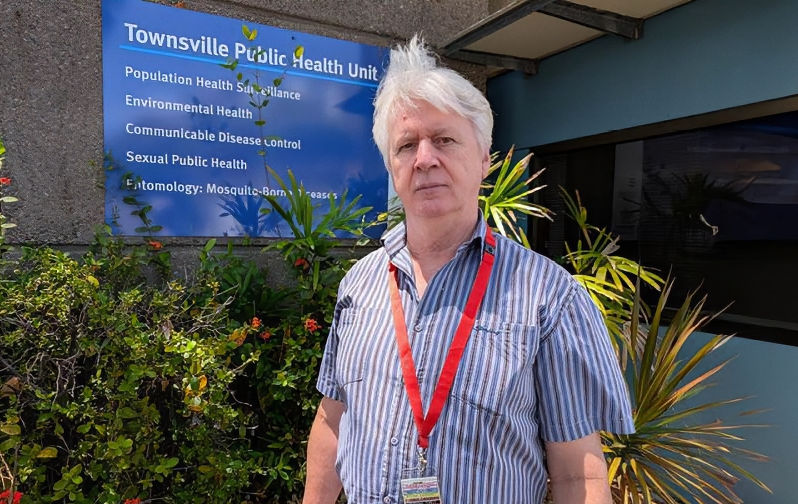
Townsville Public Health Unit Director Dr Steven Donohue said a resident was being treated in Townsville University Hospital for Japanese encephalitis virus, most likely contracted in the Yelarbon area.
“This is the first case of JEV that we have seen in Townsville, and it is very unlikely the patient got the disease here as they had been holidaying in southern Queensland where the virus has been present,” Dr Donohue said.
“The resident with Japanese encephalitis is in a stable condition in hospital.”
This is the first human JEV case in Queensland since May 2022.
As a precaution, residents and visitors in the Goondiwindi region should continue mosquito-safe practices such as wearing light colours, long sleeves, socks, and insect repellent when outdoors and utilising mosquito screens when indoors.
The majority of JEV cases show no or few symptoms, with less than one percent of those infected with JEV going on to develop the more serious Japanese Encephalitis (JE) disease.
Those who do develop symptoms may experience a fever and headache or abdominal pain and vomiting in children. If you are concerned, please seek medical advice.
Mosquitoes are most active at dusk and dawn, and staying indoors during this time can help avoid them.
Information about the Japanese Encephalitis Virus can be found on the Queensland Health website here: Japanese Encephalitis Virus
Goondiwindi Regional Council has a plan to actively support Queensland Health in the coming weeks on the testing and monitoring of mosquitoes in the area.

