
NURSING staff at Moree Hospital will take part in statewide strike action tomorrow after wage talks between the NSW Nurses and Midwives’ Association and the NSW Government failed to reach an outcome.
Some public sector nurses and midwives across New South Wales will go on strike for 24 hours on Wednesday, November 13, with some Moree staff taking part in the 24-hour stoppage.
Moree union representative Sanda Hollands said others will stop work for shorter periods.
“Over the course of the day, between eight to 10 nurses will be involved in direct strike action, which is a significant number given the size of our health service,” Mrs Hollands said.
“Others will provide minimum staffing, attending to essential nursing duties only.”
The Nurses and Midwives’ Association notified members last week, confirming the 24-hour strike will go ahead from the start of morning shift on Wednesday.
Association general secretary, Shaye Candish, said the union had been forced to take this action, after no progress on pay had been made during the four-week intensive negotiation period.
“This strike action isn’t taken lightly, but the government has left us no other choice. It cannot continue to underestimate the anger within the nursing and midwifery professions,” Ms Candish said.
“Our members are extremely frustrated and disheartened. They have been holding on for an outcome on better pay, juggling challenging working conditions, trying to manage their bills in a cost-of-living crisis, and now they feel terribly let down.
“Not only is the state government not willing to put any new money on the table to pay nurses and midwives adequately for the work they do, it also doesn’t have a solution to address the interstate pay and gender pay disparities,” she said.
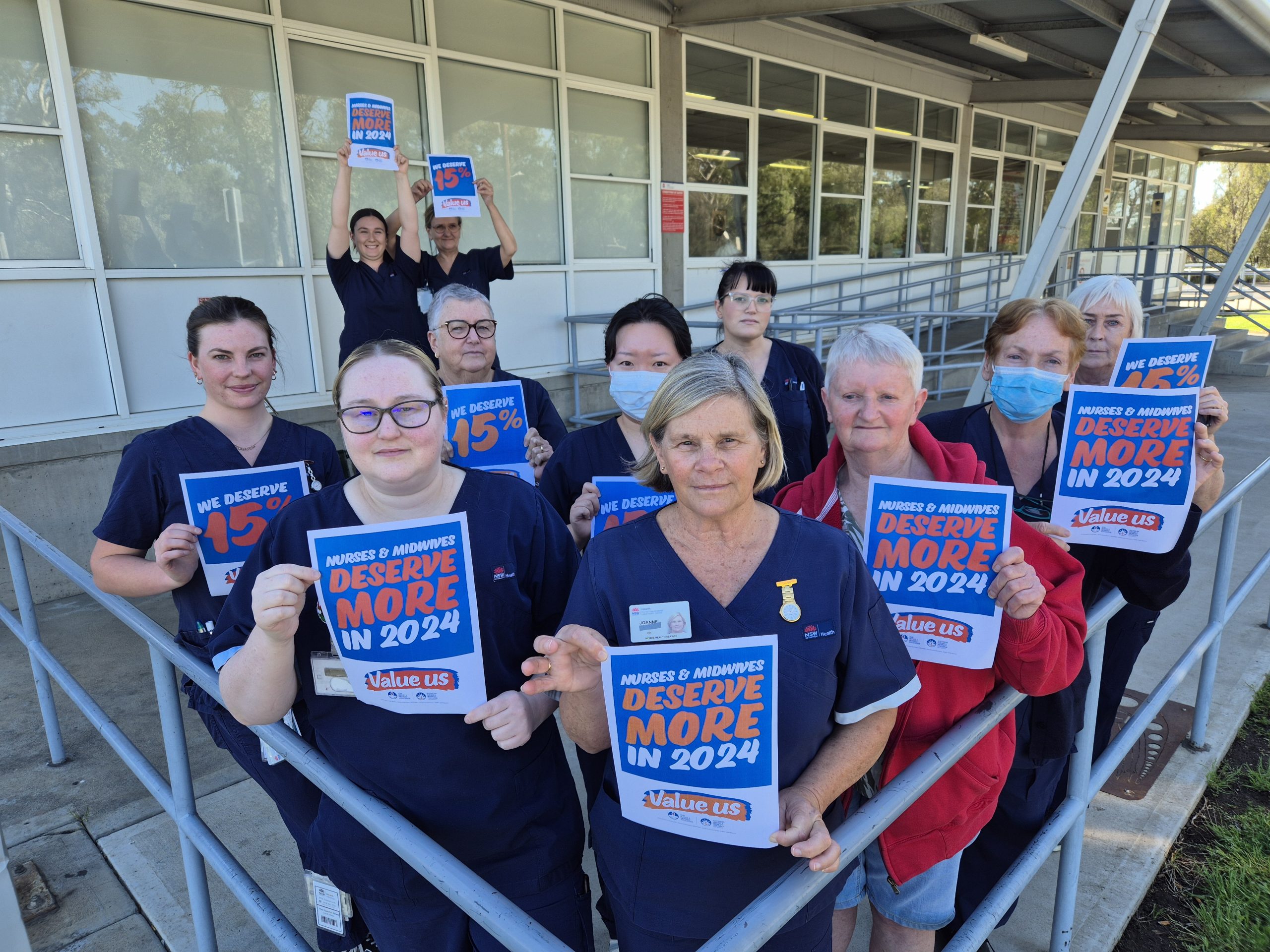
Moree nurses and midwives stopped work for one hour in August and again in September as part of a statewide campaign for a 15 per cent wage rise.
“We have some of the lowest paid nurses and midwives in the country, yet we continue to see record activity in our emergency departments and across the public health system. It’s no wonder nurses and midwives are continuing to move interstate or reevaluate their careers.
“Other female-dominated workers such as teachers, early childhood educators and aged care workers are being valued and well remunerated by Labor governments. Yet the NSW government is happy to let the gender pay gap grow in NSW, which is now the highest in a decade.
“Almost 70,000 public sector nurses and midwives across the state are worse off, and they will continue to slip further down the pay and conditions ladder, if this government doesn’t step up and deliver a decent wage increase for its single largest female workforce.”
Association assistant general secretary, Michael Whaites, said despite repeatedly saying the wages cap had been removed, the government was refusing to put an offer to nurses and midwives that would address the underlying problems.
“This contradicts the government’s claims they are trying to fix the gender pay gap or that they had any intention of negotiating with us.” Mr Whaites said.
“Instead, they are just offering the same to our workforce as every other public sector worker and failing to take our issues into account.
“From May to October, we have showed up to Ministry of Health negotiations and participated in good faith.
We identified savings to fund our claims, but no formal offer was made on pay, night duty penalties or salary packaging.
“The government says it’s delivering nurse-to-patient ratios and that it can’t provide a decent pay increase too.
“The government expects that nurses and midwives stay low paid in order to staff the hospitals. The very real risk is that ratios will be no more than a commitment on paper unless they deliver competitive and attractive rates of pay so they can recruit,” he said.
“We are calling on the Premier and Treasurer to intervene and direct new money into the Health budget to address the interstate and gender-driven wage disparity impacting nurses and midwives.
“The government must find this new money, because if it doesn’t, the current recruitment and retention challenges will only worsen.
“The government cannot afford to lose any more nurses or midwives. It must fix this now, or the public health patients of NSW will suffer.”

